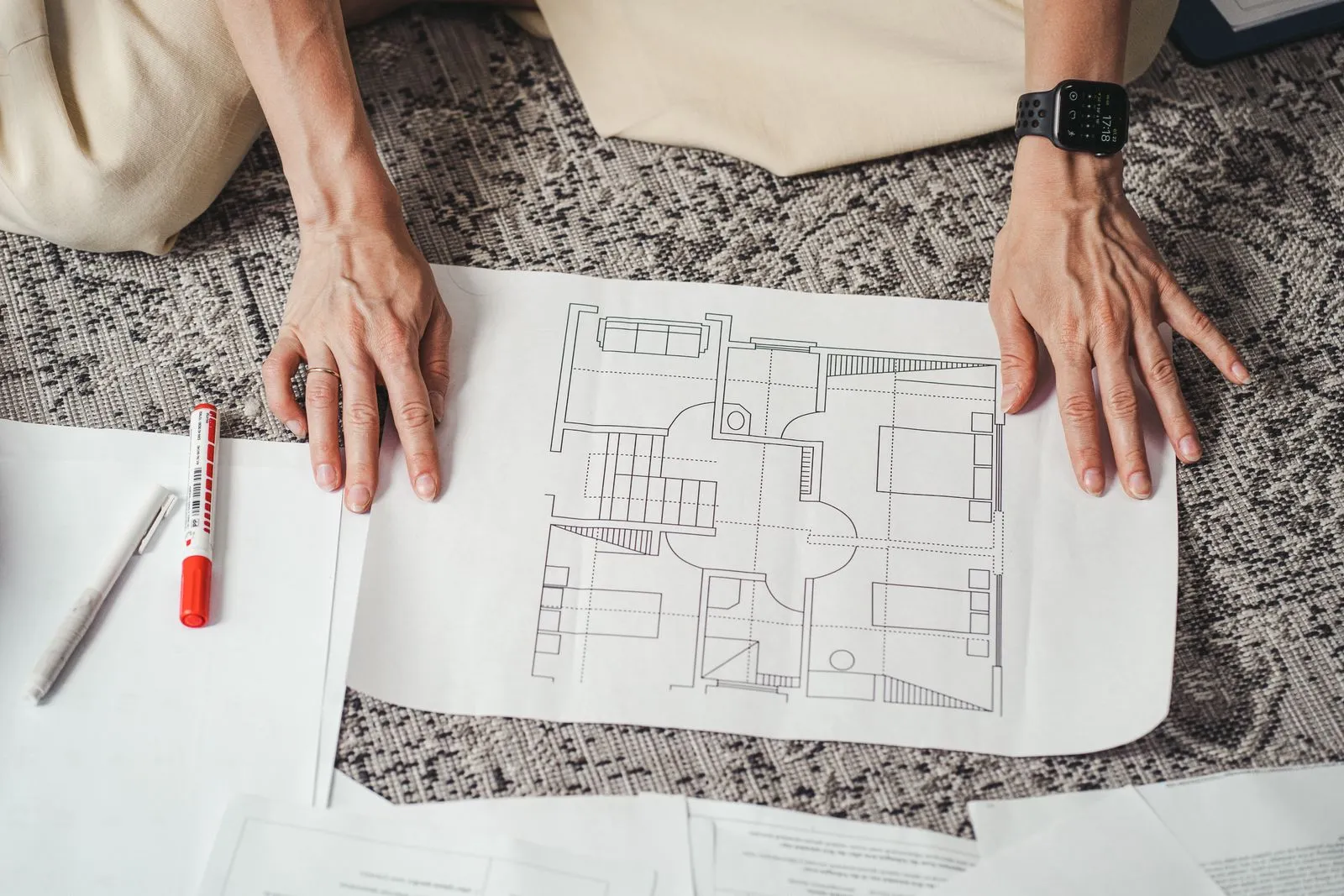
An initial interior design consultation is a chance to explain what you want from your space and explore what might be possible. You do not need a finished plan or a perfect folder of references. A few practical details can help the conversation get specific sooner: approximate room measurements, images that show what you like, and an honest account of how you use the room. Prepare what you can, and note anything you still need help deciding.
Measure the room and note constraints
Record the room’s length, width, and ceiling height, even if your measurements are approximate. Note the position and size of windows, doors, radiators, fireplaces, and built-in storage. Include where doors swing and whether windows open inward. A simple sketch with labels can be more useful than a list of numbers because it shows how the features relate to one another.
Also note details that could affect the design, such as sloped ceilings, uneven floors, sockets, light switches, or access routes for large furniture. Take clear photos from each corner and include close-ups of features that may need attention. If you cannot measure safely or accurately, say so; a designer can explain what should be checked during the next stage.
Collect useful inspiration
Save images of rooms, furniture, colors, and materials that appeal to you. The references do not need to come from interior design publications; a hotel room, artwork, or favorite piece of clothing may help communicate a color or mood. For each image, write a short note about what you like, such as the lighting, natural materials, or amount of visual detail.
Include a few examples of what does not suit you, if that feels helpful. Be specific about the reason: perhaps a room feels too formal, a color seems cold, or open shelving would be hard to maintain. This gives the designer clearer boundaries than a broad label such as “modern” or “cozy.” Keep the collection manageable so you can explain your choices without losing the main ideas.
Explain how you use the space
Describe who uses the room and what happens there on a typical day. A living room might also serve as a work area, play space, or place to host guests. Mention how many people need to sit, where you prefer to read, and whether you need storage for specific items. These details help shape a plan around your routines rather than appearance alone.
Be clear about practical requirements, including pets, children, accessibility, cleaning preferences, and items that must stay. If you work from home, explain what equipment needs to fit and whether video calls require a tidy background. It can also help to identify what frustrates you now: poor lighting, clutter, awkward circulation, or furniture that blocks a doorway. Everyday problems often point to useful design priorities.
Set priorities and questions
Before the meeting, list your main goals in order. Decide what matters most, such as improving storage, changing the layout, adding comfortable seating, or making the room feel brighter. Note what you are open to changing and what should remain. If you have a budget range or a preferred timeframe, share it plainly so the discussion can stay grounded in your circumstances.
Bring questions about the design process, what the consultation will cover, and what information or decisions may be needed afterward. You can also ask how the designer approaches sourcing, installation, or coordinating with trades if those topics apply. At Stillroom Interiors, a short list of priorities and questions can help make an initial conversation more useful without requiring you to have every answer in advance.
A sketch, a small set of reference images, and notes about your routines are enough to give an initial consultation a strong starting point. Focus on what you know, and flag the questions you would like help answering. With those basics prepared, you can contact Stillroom Interiors to discuss your space and the next steps.